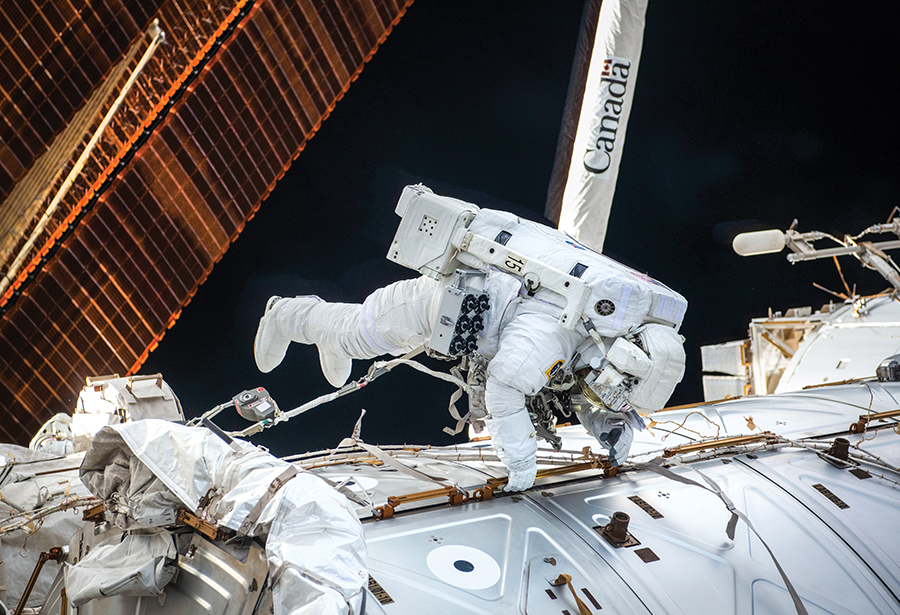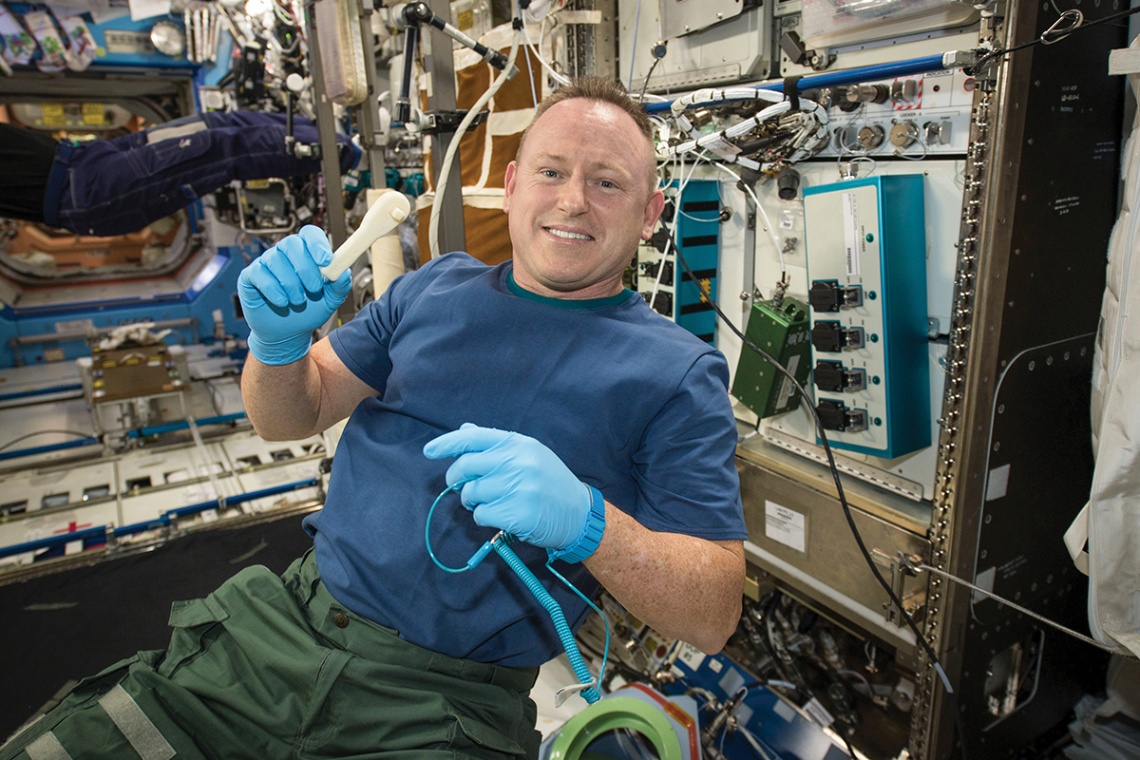
Last June, when NASA astronaut Barry “Butch” Wilmore piloted Boeing’s first-ever manned Starliner capsule bound for the International Space Station (ISS), the retired Navy test pilot had no doubt Who was really in control.
For the first 24 hours after the rocket launch from Cape Canaveral, Florida, Capt. Wilmore was at the controls of the 10-foot-tall white capsule, with black and blue trim, while orbiting the Earth alongside fellow astronaut Suni Williams. The two-member crew had joined the test flight after the original crew bowed out following years of setbacks and delays.
The spaceflight was going as planned until moments before the capsule was supposed to dock onto the ISS some 250 miles above the Earth. That’s when the first thruster failed. As the Starliner got closer to the space station, the second thruster was lost. Then the third and fourth thrusters died.
Wilmore says that before NASA Mission Control commandeered the spacecraft for its final approach to the space station, at 17,500 miles per hour, he briefly contemplated whether aborting the mission and returning to Earth was even possible.
Yet in the midst of an extremely precarious situation, Wilmore was at peace.
“I completely understand God’s sovereignty,” he tells Decision. “That He is in control of all things at all times. And I felt that. I thought that very thing as we were losing those thrusters. The Lord’s got this, and if it means He takes me today, so be it.’ And that’s the way—even before we launched, my wife and I, our daughters, we understand that and we’re OK with that because, if the Lord doesn’t return first, we’re all going to go one day. And if He chooses to take us in certain scenarios, that’s OK.
“He’s working out His plan and His purpose, and how we fit into that is wonderful. Because ‘eye has not seen, nor ear heard, nor have entered into the heart of man the things which God has prepared for those who love Him,’ and we do” (See 1 Corinthians 2:9).
Wilmore’s calm and steady response under pressure has been shaped by his unwavering faith in God’s purposes and plan for his life, including the 21 air combat missions in the early 1990s during Operation Desert Storm, where dodging missiles and other anti-aircraft artillery was a matter of survival.
“I attribute it to the Lord’s calmness,” he says. “I mean I wasn’t afraid. … And that calmness, I think definitely has helped me since, even out there in front of the space station on the 6th of June when all that stuff happened with Starliner. I mean just the building blocks of sanctification, the processes of being there in trying situations and how to compartmentalize all those. And a lot of those were learned in the fray of combat.”
The Murfreesboro, Tennessee, native’s return mission to the ISS was supposed to be much shorter than the six-month stint during which he commanded the space station about 10 years ago. But what was supposed to be an eight-day mission became 286 days on the space station before the SpaceX Dragon capsule, owned by Elon Musk, was deployed by NASA to help bring Wilmore, Williams and two other astronauts home. The 17-hour journey culminated with a splashdown landing March 18 off the Florida coast.
NASA deemed the troubled Starliner too risky to bring Wilmore and Williams home due to its thruster problems and helium leaks. The empty capsule, however, did make it back to Earth on Sept. 6.
And although Wilmore’s nine-month sojourn in space robbed him of experiencing much of his second daughter’s senior year of high school, he remains grateful for his spiritual growth and mission-related accomplishments during his extended stay in space.
One of the more worshipful times Wilmore experienced was around Christmastime, when he videoed himself reading from Luke 2 with Israel in sight from the cupola, the space station’s panoramic view from its seven-window observatory.
Wilmore broadcast the video from the ISS for his church’s Christmas Eve service in Pasadena, Texas. “The Lord laid it on my heart and I contacted them,” he says. “I mean, here’s an opportunity. I’m literally in the heavens and I could get up in the cupola, in the window to the heavens, and share this wonderful passage during our Christmas service. And wow! I mean, praise the Lord for that opportunity.”
Corey Johnson is one of the staff pastors at Providence Baptist Church, where Wilmore has served as a lay elder for more than a decade. Johnson describes Wilmore as a servant leader who serves in the church’s weekly prison ministry and cares deeply for the elderly. “He is often asked to officiate funeral services because of how much time he’ll spend with people at the end of their lives,” Johnson says. “Barry is motivated by Scripture; he’s been given much, and so he’s a good steward with what he’s been given in life.”
Billy Adkison, 92, was honored to have Wilmore officiate his wife’s funeral about five years ago following her battle with Alzheimer’s. During the astronaut’s first stint on the ISS, he also sent her a video message of encouragement from space. “She thought that was the greatest thing,” Adkison says. “That was the best medicine she had.”
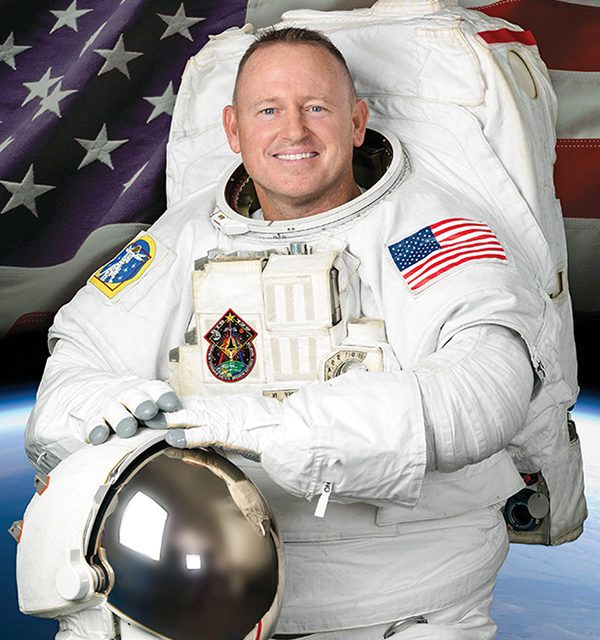
Photo: NASA