But now, Paul declared, just as we formerly gave ourselves to these wicked habits, we are to give ourselves to developing habits of holiness (Romans 6:19). We are to put off our old self—our sinful disposition and its habits—and put on the new self—with its character and habits of holiness. To train ourselves in godliness (1 Timothy 4:7) is to discipline and structure our lives so that we develop godly habits. Putting off these sinful habits is what Paul calls mortifying or putting to death the deeds of the body (Romans 8:13).
Though we are to deal with these habits of unholiness, we must not try to do it in our own strength. Breaking sinful habits must be done in cooperation with the Holy Spirit and in dependence upon Him. The determination that “I’ll not do that anymore,” based upon sheer human resolve, has never once broken the shackles of sin. But there are practical principles which we can follow to train ourselves in godliness.
The first principle is that habits are developed and reinforced by frequent repetition. Another definition of habit is “a behavior pattern acquired by frequent repetition.” This is the principle underlying the fact that the more we sin the more we are inclined to sin. But the converse is also true. The more we say no to sin, the more we are inclined to say no.
Therefore, in dependence on the Holy Spirit, we must systematically work at acquiring the habit of saying no to the sins that so easily entangle us. We all know what these sins are—the sins to which we are particularly vulnerable. We begin by concentrating on saying no to these. Then God will lead us on to work on other sins which we may not even be aware of at this time. The more we succeed in saying no to our sinful desires, the easier it becomes to say no.
In the same manner we can develop positive habits of holiness. We can develop the habit of thinking thoughts that are pure, true and good. We can develop the habits of prayer and meditating on the Scriptures. But these habits will only be developed through frequent repetition.
The second principle in breaking sinful habits and acquiring new ones is to never let an exception occur. When we allow exceptions, we are reinforcing old habits or else failing to reinforce the new one. At this point we must watch the “just this once” type of thinking, which is a subtle, dangerous trap. Because we are unwilling to pay the price of saying no to our desires, we tell ourselves we will indulge only once more and tomorrow will be different. Deep inside we know that tomorrow it will be even more difficult to say no, but we don’t dwell on this fact.
The third principle is that diligence in all areas is required to ensure success in one area. Owen said, “Without a sincere and diligent effort in every area of obedience, there will be no successful mortification of any one besetting sin.” We may feel that a particular habit “isn’t too bad,” but continually giving in to that habit weakens our wills against the onslaughts of temptation from other directions. This is the reason, for example, that it is so important for us to develop habits of self-control over our physical appetites. We may think indulging these appetites isn’t so bad, but such indulgences weaken our wills in every other respect of our lives.
Last, don’t be discouraged by failure. There is a vast difference between failing and becoming a failure. We become a failure when we give up—when we stop trying. But as long as we are working on those sinful habits, regardless of how often we fail, we have not become a failure, and we can expect to see progress.
It is vain to guard our minds and emotions against that which comes from without if we do not at the same time deal with habits of sin which are within. The battle for holiness must be fought on two fronts—without and within. Only then will we see progress toward holiness.
The Scripture quotation is taken from The Holy Bible, New International Version, 1984.
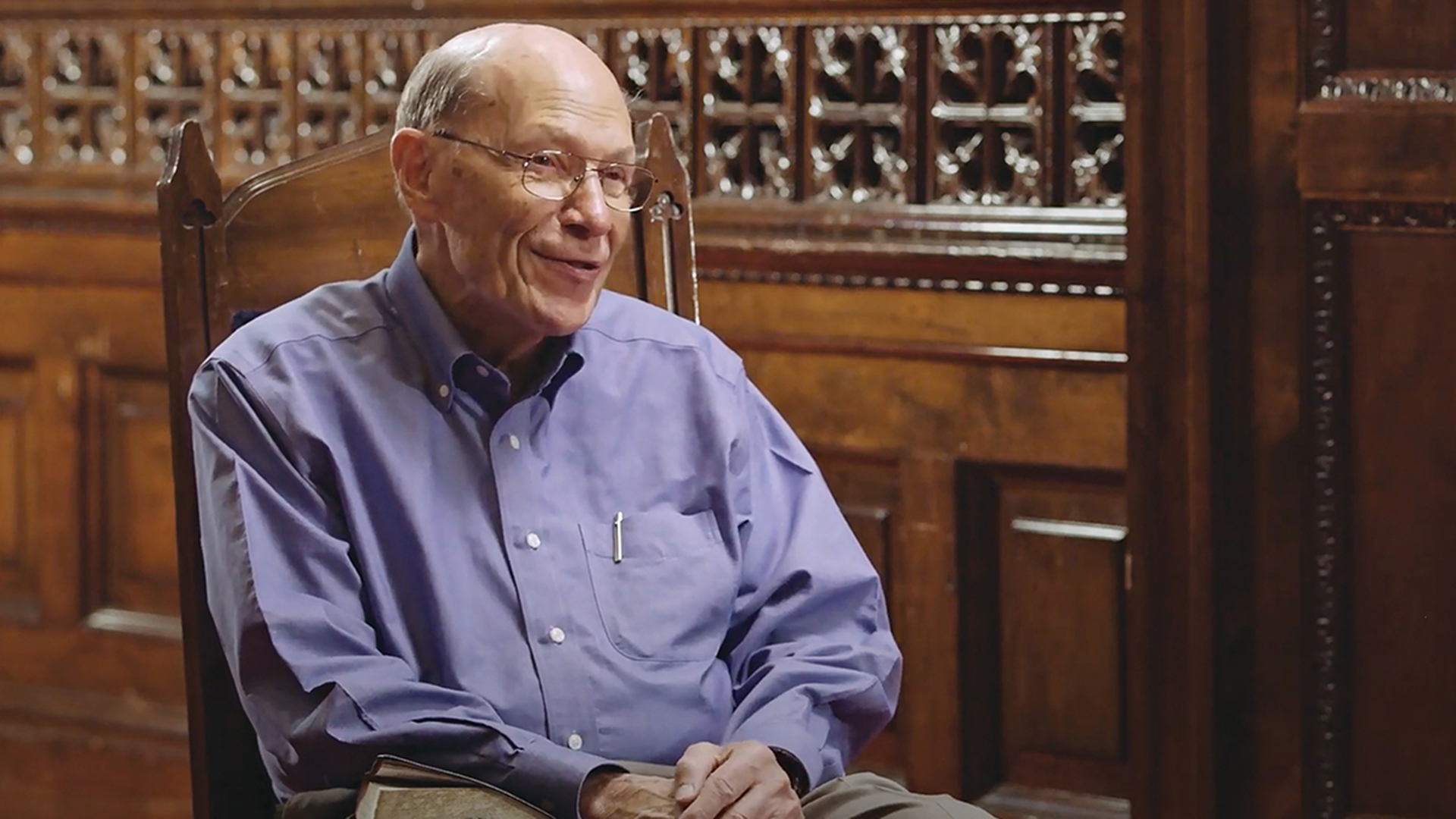
Jerry Bridges (1929-2016) was an evangelical Christian, speaker and staff member of The Navigators for more than 50 years. He was the author of a dozen books, including The Pursuit of Holiness and The Discipline of Grace.
Some content taken from The Pursuit of Holiness, copyright ©1978, 1996, 2006 Jerry Bridges. Used by permission of NavPress represented by Tyndale House Publishers. All rights reserved.