The tragic collapse of the Francis Scott Key Bridge in Baltimore in late March sadly claimed the lives of at least six people, including construction workers who had been repairing potholes on the bridge.
Since it opened in 1977, the 1.6-mile bridge along I-695 had become a critical link for more than 30,000 vehicles traveling daily to places like Washington, Philadelphia and New York. The four-lane bridge, an architectural marvel, stretched across the Baltimore Harbor and its bustling shipping channels.
Had the 985-foot-long cargo ship struck the bridge during rush hour or midday instead of the wee hours of the morning, the human carnage would have been unthinkable. As it is, this maritime disaster at the 20th largest port in the nation could have severe economic and supply chain implications for years to come.
As I think about the ripple effect of consequences for local commuters in Maryland and the transportation industry at large, I’m reminded how some strategically placed bridges are an economy’s lifeline, both globally and domestically.
If you think about, it could be said that the Billy Graham Evangelistic Association is in the bridge-building business—connecting people to Almighty God exclusively through repentance and faith in His Son, the Lord Jesus Christ. In fact, every person who makes a decision for Christ at one of our Festivals, Celebrations or Tour events receives our Living in Christ discipleship booklet, which includes a diagram that illustrates how the cross of Christ bridges the vast chasm between us and God, and how we can cross the bridge through repentance and faith.
Although Baltimore transportation has been rerouted, albeit at a snail’s pace, following the collapse of the bridge, BGEA’s mission has no alternate route. After all, Jesus declared in John 14:6: “I am the way, the truth, and the life. No one comes to the Father except through Me.”
And like the emergency responders who warned drivers to turn away from the impending doom of the collapsed bridge, I am compelled by God’s love to warn and encourage people across the U.S. and around the globe to repent of their sins by turning from the wide path that leads to destruction and instead follow Christ’s narrow path to God’s forgiveness and healing.
I praise God for the thousands of people along the U.S. southern border who responded to the proclamation of the life-saving Gospel during our recent 10-city God Loves You Frontera Tour. (Read how God moved mightily, pages 16-29.)
As of the writing of this column, I’m preparing to preach in Krakow, Poland, about the Good News of Jesus coming to Earth on a rescue mission for those drowning in a sea of hopelessness under the weight of their sin. By late April, my son Will will have returned from preaching in Portugal that the cross of Christ is humanity’s one and only bridge to God and life everlasting.
And in June, I will be preaching in England and Scotland “ … that Christ died for our sins according to the Scriptures, and that He was buried, and that He rose again the third day according to the Scriptures,” (1 Corinthians 15:3-4).
“Unlike man-made bridges that collapse under extreme forces, Jesus bore the weight of humanity’s sins—past, present and future.”
I was amazed by the video footage of how the bridge in Baltimore, forged with tons of steel and concrete, crumpled like a piece of paper in a matter of seconds when the container ship collided with one of its massive support columns.
Unlike man-made bridges that collapse under extreme forces, Jesus bore the weight of humanity’s sins—past, present and future. The Son of God, who never once sinned, shed His blood and died for every single one of our trespasses—“for the wages of sin is death,” (Romans 6:23).
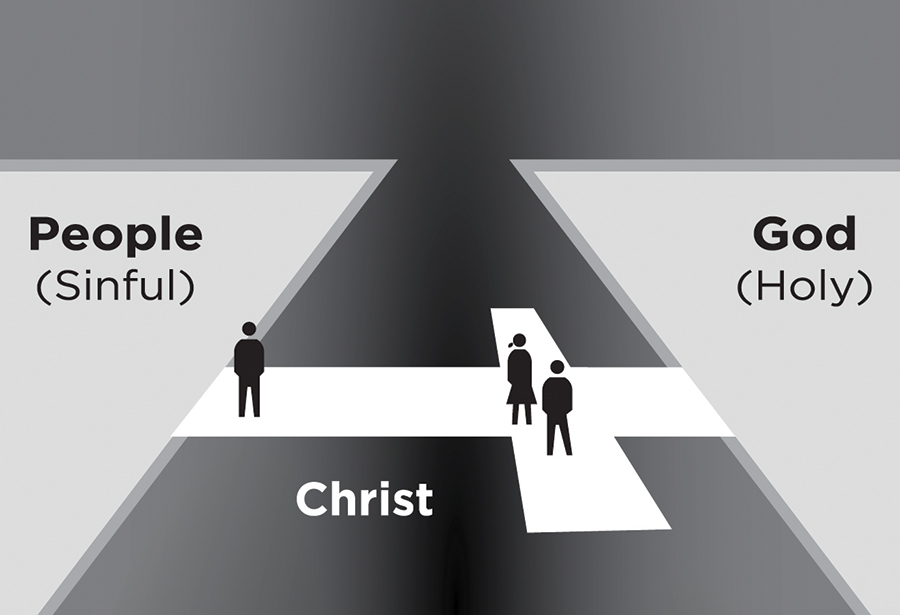
The cross of Christ bridges the chasm between us and God, and we can cross the bridge through repentance and faith. Illustration: ©BGEA