When Hurricane Helene struck northwestern Florida in late September as a Category 4 storm, Furkan Koc—about 10 hours away in western North Carolina—knew he wanted to help with recovery efforts in the beleaguered Gulf Coast region.
He and his wife, Dilek, had also been talking about visiting a church near their home to get better connected with their mountain community in Swannanoa, North Carolina.
But less than 24 hours after Helene made landfall, the couple, originally from Turkey, was awakened in the middle of the night by geese squawking ominously outside their front door.
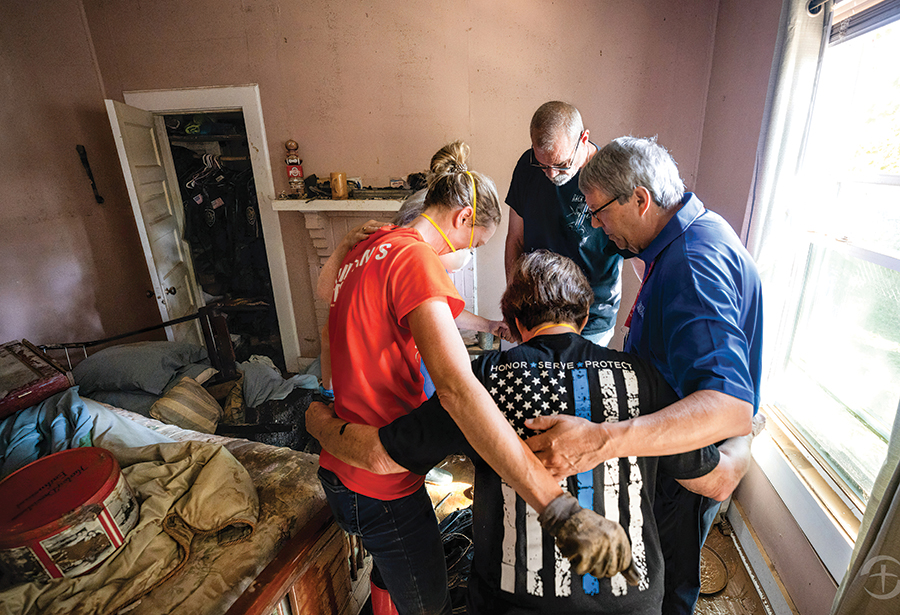
Within hours, the nearby Swannanoa River—where the Kocs had waded and splashed with their young children—had burst its banks, filling their house with nearly five feet of water. “In 100 years, the river has never passed through here,” Dilek said.
Before abandoning their home, the Kocs moved their vehicles to higher ground and parked their riding lawn mower on top of their stepped patio, expecting to return home shortly after sunrise.
But come morning, this former textile town—located between Black Mountain and the Billy Graham Training Center at The Cove in Asheville—looked like a muddy sea of debris as only rooftops of houses and storefronts dotted the flooded landscape.
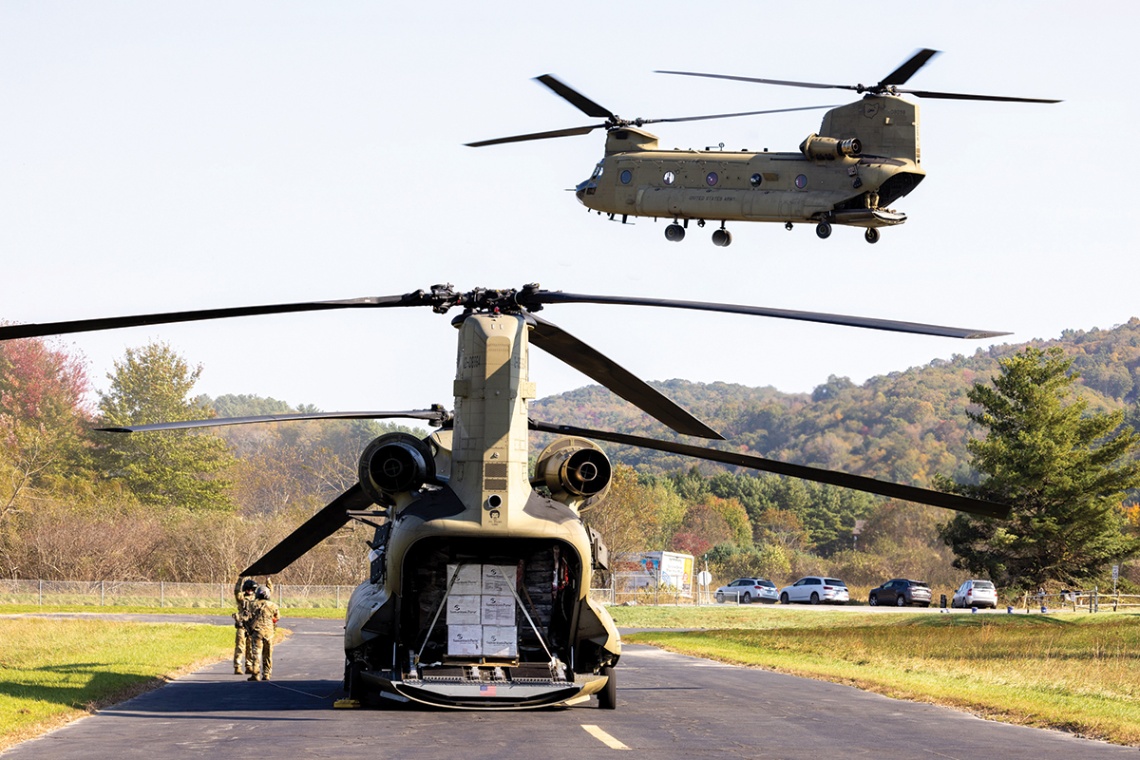
“As I flew over in the helicopter, the damage from the storm and flooding is everywhere,” Franklin Graham posted on Facebook. “This community is just a few miles from where my parents lived and where I grew up as a boy. It’s heartbreaking to see the overwhelming loss for so many families.” As of early November, nearly 250 deaths had been reported in the wake of Hurricane Helene, including more than 100 in North Carolina.