
A Biblical Perspective on the Middle East 


Written by: Joel C. Rosenberg

Joel C. Rosenberg is a Jewish evangelical Christian, a bestselling author of more than 20 books and editor-in-chief of All Israel News and All Arab News. He lives in Jerusalem and is the founder of the Joshua Fund, a nonprofit that seeks to bless Israel and her neighbors in the Name of Jesus. Here he offers Decision readers a Biblical perspective about recent events in the Middle East.


Q: So much has happened recently with Israel and its neighbors. How would you describe the current situation?

A: We are experiencing the most volatility and upheaval in the Middle East in many, many years. I know that’s saying a lot, but we are watching the utter transformation of the Middle East in ways that we have not seen since the birth of the state of Israel in 1948 and the fall of the Shah of Iran in 1979.

Second, we should be praying for the liberation of Iranian people from the tyrants of Tehran. The Iranian regime is weakened as a result of the airstrikes by the United States and Israel, which took out Iran’s nuclear facilities, destroyed most of its ballistic missile capacity and the factories that build those missiles, and assassinated the top 40 Iranian military generals and officials. So the regime is embarrassed and humbled, but it’s unrepentant.
Third would be the spread of peace and normalization agreements between Israel and various Arab and Muslim nations. Not all nations in the region are Arab, but they’re all Muslim. And so the question is, what’s the next step in working peace treaties between Israel and Saudi Arabia, between Israel and Lebanon? Is there the possibility of peace with Israel and the largest Muslim country in the world, Indonesia? That is something under active conversation. What about Mauritania—would it sign a peace treaty as part of the Abraham Accords? And what is the future of Israel in Syria? I don’t expect a treaty there, but something could happen that calms things down. So the spread of peace and normalization treaties would be something very much to pray for.

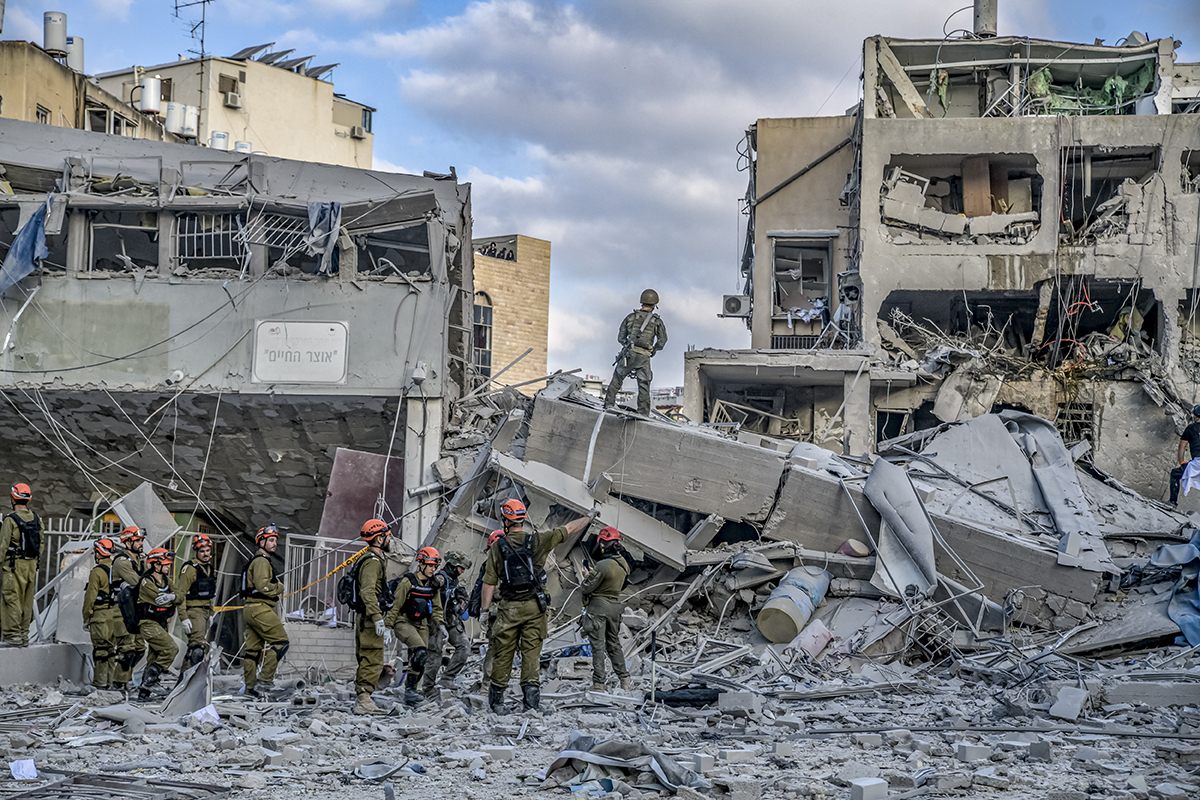
But the most important thing is the spread of the Gospel throughout Israel, the Palestinian Territories and the entire region, and the strengthening of the church in the Middle East. Because however this era of terror and tyranny, volatility and death resolves itself, there are the ruins and results of all that tyranny: shattered lives.

Q: How do you see the Gospel spreading in the region now?

A: As bad as the situation is, it does create an environment where people are looking for light in the darkness. They’re looking for hope in the midst of a hopeless environment. And their governments have not shown them that they have the answers. I would argue that their religions, both Jewish and Muslim, have not convinced the people of the region that they’re bringing hope. So people are open to considering that maybe Jesus isn’t just a good Jewish rabbi or a good prophet, but that Jesus really is the crucified and resurrected Savior, God Himself, who came to rescue us and adopt us into His royal family. More Muslims and Jews are listening to the claims of the Gospel than ever in history. And more Jews and more Muslims are coming to faith in Jesus as Messiah, as King, as God and Savior, than at any other time in history.

This is not an easy task. But finally, the conditions are ripening for people to at least listen carefully, seriously. This is what we see everywhere we go.

Q: Christians know that true, lasting peace won’t come until Jesus returns. And yet we are to pray for the peace of Jerusalem, and we want to pray for an end to suffering and killing. How do you balance those things?

A: It’s certainly true that lasting peace won’t come until Jesus Christ literally and physically returns to establish His reign over the planet. That being said, I have people who say to me, “You can’t think that there would be any peace treaties in the Middle East that would be useful because the antichrist is going to come and create a deceptive peace with Israel in the last days, according to Daniel 9.”

I would say that yes, that will happen. But Jesus said, “Blessed are the peacemakers” (Matthew 5:9). The psalmist tells us to seek peace and pursue it (see Psalm 34:14). The Apostle Paul in Romans 12:18 tells us to be at peace with all men to the extent it depends on us. Ecclesiastes 3:8 says there is a time for war, and there is a time for peace.

So let’s not be cynical and say that every peace treaty or ceasefire is satanic and deceptive. We have to understand that having calm and quiet between nations is a good thing. Let’s at least ask. God can say no if He sovereignly has other plans, but let’s be faithful in praying and being peacemakers to the extent that we can.

Q: What should Christians be doing regarding the Palestinian people?

A: For followers of Jesus Christ, our job is to love Israel and her neighbors. It’s not that Christians are supposed to love Israel and hate the Palestinians. No, we’re to love Israel and the Jewish people and also love and have compassion for the Palestinians. Too many Christians who love Israel haven’t really thought through their Biblical obligation to love Israel’s neighbors—and even Israel’s enemies.

But that is what Jesus commanded, and that’s what He practiced. Jesus went into Judea and Samaria. He went into Lebanon. He crossed the Jordan River and ministered in the country we now call the Hashemite Kingdom of Jordan. The Gospel spread all through Syria.

Photo: Matan Golan / Middle East Images / AFP / Getty

So Jesus loved the neighbors, and He had compassion. While that was not His primary mission, He did model it. And then He told His disciples to take the Gospel from Jerusalem into Judea and Samaria and the ends of the Earth.

Q: How can our readers pray for the Messianic Jewish community and for Palestinian Christians?

A: The Messianic Jewish community in Israel is exhausted by this war. The pastors, the ministry leaders, their wives, their teams have been serving so faithfully for so long, with missiles coming from all directions and their own sons and daughters serving in the Israeli military. They need encouragement and refreshment. There’s a tremendous need for Biblical counseling. We’re doing a lot of humanitarian relief work through the local believers as they try to care for their own devastated communities.

And pray for Palestinian believers to have great courage to share the Gospel of Jesus Christ with their Muslim neighbors—especially in Gaza—and to have great compassion to show the love of Jesus Christ to their suffering neighbors through humanitarian aid and through caring, especially for the many widows and orphans in their midst. Please also pray for the Lord to grant Palestinian pastors a burning desire not only to preach the Gospel but to plant new house churches based on the model in Acts 2. ©2025 BGEA

Interviewed by Bob Paulson, editor. 

For more information about The Joshua Fund, go to JoshuaFund.com.

Photo: Courtesy of Joel C. Rosenberg