He prayed, “If You can do for me what this man says, right now, would You do it for me?’” And God did. “The minute I prayed and opened up, I felt like a tsunami had opened the roof and came down on me. I was just drowning in God’s love, and it was wonderful.”
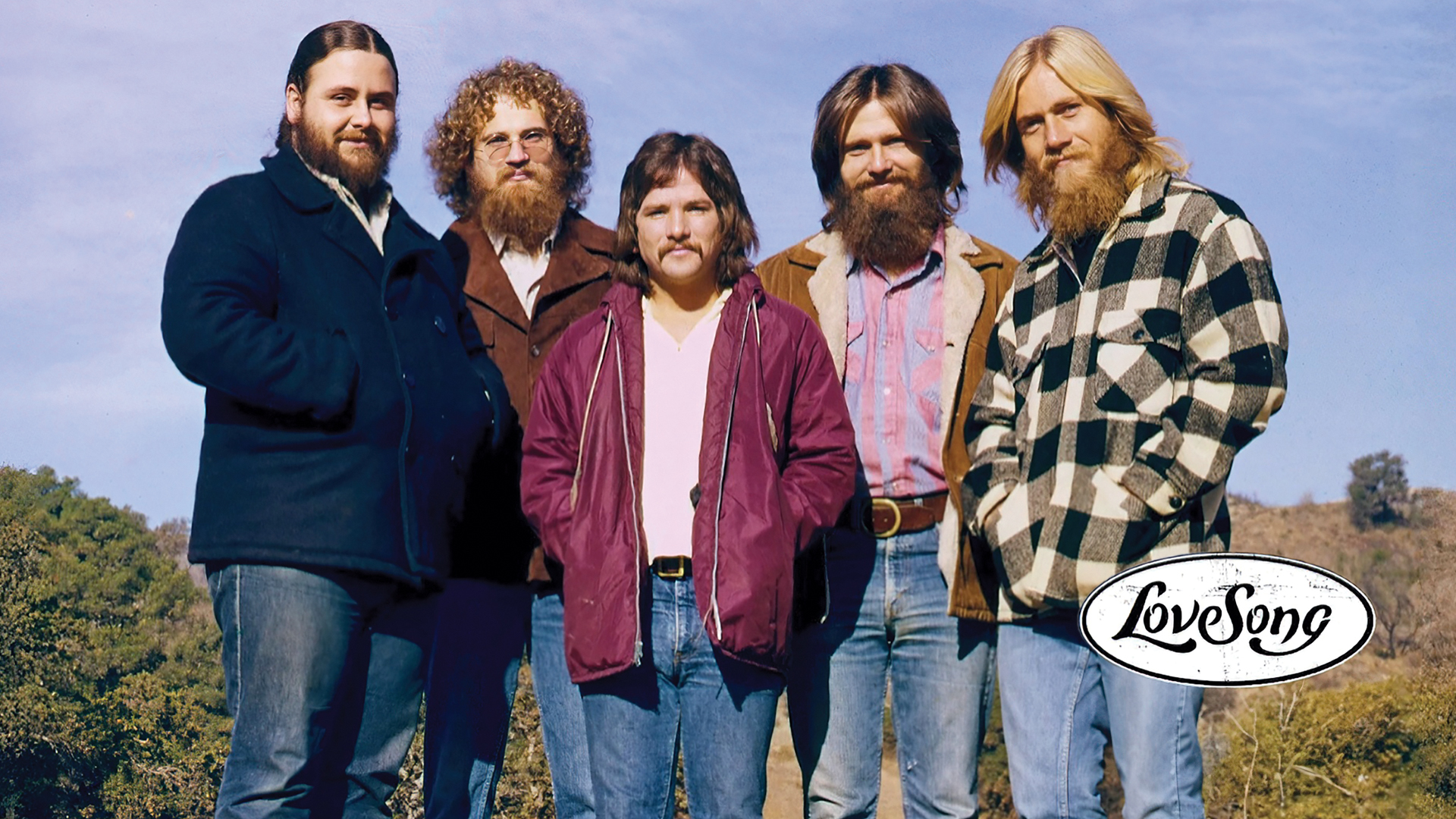
Butler, whose son, Chad, cofounded the band Switchfoot in the late 1990s, joins more than 20 others who are interviewed on the new three-part docuseries “A Band Called LoveSong,” now streaming on Prime Video and SalemNOW. The documentary tells the story of how this group of men with long hair and beards, usually in jeans and T-shirts, introduced an entirely new genre of music with lyrics and harmonies that captivated their audiences during the Jesus Movement, when thousands of youth were caught up in the joy of knowing Jesus.
LoveSong’s music became the early soundtrack of the Jesus Movement that swept America, breaking boundaries and helping set the stage for the emergence of Contemporary Christian music and opening the door to artists like Michael W. Smith, Michele Pillar, Phil Wickham, MercyMe and Jeremy Camp. Smith appears in the documentary, as does 1950s pop music icon Pat Boone, a devout Christian who witnessed God moving among those young people in the 1960s and early ’70s. Billy Graham and Johnny Cash also appear, in footage from Explo ’72.
Smith, whose career skyrocketed in the 1980s, was a young teenager when he wandered into a clothing thrift shop in his small West Virginia hometown and stumbled upon a Maranatha album, which had two LoveSong titles.
“It was a white album with a red maranatha sign on the front,” Smith says. “It said, ‘The Everlasting Living Jesus Music Concert.’ I turned the cover over, and everybody had long hair, and I thought, This is awesome! And I took it home and listened to it. It wasn’t but a month later that I walked down the aisle of my Baptist church and thought, This is what God wants me to do for the rest of my life.”
LoveSong’s self-titled album came out a short time later, and included the song “Two Hands.” Two lines in that song sum up everything about LoveSong’s ministry and the Jesus Movement: “With one [hand] reach out to Jesus, and with the other bring a friend.” It also included “Little Country Church,” which tells the story of the roots of Contemporary Christian Music.
Worship leader Tommy Walker first heard LoveSong as an 11-year-old in El Paso, Texas. After the concert, the group came to his home and sang “Sometimes Alleluia.”
“At the deepest core part of my soul, I looked at those guys and said, ‘That’s what I want to do with my life,’” Walker said. “It was so deep, it was so profound, the calling of God that came to me, through LoveSong in that moment. I’ve never wavered from it.”
By the time LoveSong disbanded in the mid-’70s, they had seen thousands come to Christ in what some call the greatest spiritual awakening in America’s history, said Coomes, who now leads the Tommy Coomes band and travels all over the world to sing at Franklin Graham events.
“The Jesus Movement was the time as a nation we were coming from subculture and protests and the Vietnam War,” Coomes told Decision. “Millions of kids were disenchanted. Well, hundreds of thousands, if not millions, of those kids came to faith in Jesus Christ. It was a true move of God that no man could take credit for.”
Prior to putting their faith in Christ, Coomes and the others were playing in different rock groups, opening for bands like Three Dog Night and the Grateful Dead. They were becoming disillusioned with the drug culture and Eastern mysticism, which hadn’t delivered any satisfaction.
“Our hearts were empty, and yet we were striving to be spiritual,” Coomes said. “We were trying to find God, and we had no way of knowing how. And here’s what bothers me to this day. Nobody was telling us about Jesus.”
Back then, Woodstock promised peace, love and liberation through sex, drugs and rebellion, said documentary director Jerry Stanley. “But the answers it offered proved hollow. And it was precisely in that collapse of false hope that the Spirit of God broke through. What the world couldn’t provide, Jesus did: reconciliation, renewal and radical transformation—starting with the youth culture and spreading out like wildfire.”
That’s why this story matters now, Stanley said. Because what God did once, He can do again.
“So don’t just watch this series and think, That was amazing back then,” he added. “Instead, watch and pray, ‘Lord, do it again in our day.’” ©2025 BGEA
To view trailers or to help fund total production of the docuseries, A Band Called LoveSong, scan the QR code.